
Nearly two-thirds of insurance complaints stem from claims handling, and delays are the single biggest driver according to NAIC data.
At the same time, insurers are navigating rising claim costs, higher claim volumes, and supply chain and labor challenges that extend claim cycles. Although some conditions are improving, policyholder relationships remain strained.
The good news is that policyholder satisfaction isn’t entirely dependent upon speed. Proactive communication is also very impactful. Providing timely claim status updates can significantly improve the claimant experience, even when claims take longer to resolve.
The Auto Insurance Claims Service Conundrum
Service challenges have been particularly evident in personal auto insurance. As the chart below illustrates, the average time to repair a car still hasn’t returned to pre-pandemic levels, according to data from J.D. Power U.S. Auto Claims Satisfaction Studies.

In addition, the 2025 J.D. Power study found that more than one-third of policyholders were not very satisfied, and the most valuable policyholders – those with long tenure, high premiums, and multiple policies – were particularly likely to switch insurers. Only 51% of these high-value lifetime customers said they would definitely renew with their current insurer, while the rest could be convinced to leave if a better option became available.
Part of the problem is that policyholders are paying more for coverage, and therefore, they expect better service and have less tolerance for delays. Auto insurance premiums increased by nearly 55%since the pandemic, according to Bureau of Labor Statistics data cited by NPR.
Adding more fuel to the fire, insurance customer expectations are rising across the board in response to shifts in technology and communication habits in all aspects of their lives. Customer engagement is no longer limited to business hours. Claimants want to be able to find answers online or reach someone 24/7. They also expect to communicate in their channel of choice, whether that be phone, email, text or digital.
When you put all these factors together, it seems like an impossible situation, but there is a solution.
Proactive Communication Makes a Difference
It doesn’t matter whether the claim is big or small, affecting a claimant’s house, vehicle or business. When lives are disrupted, information matters. A lack of information creates a void that is filled by anxiety, anger and repeat phone calls, further exacerbating the service situation.
Proactive communication can fill that void. Sure, the claimant might not be happy that things are taking longer than expected, but at least they know their claim is progressing and they’re not getting the runaround.
According to Property Casualty 360, David Pieffer, vice president and head of the property and casualty practice at J.D. Power, says, “Managing expectations can negate the negative effects of an elongated claim cycle." He also says it’s important to use the customer’s preferred channel of communication.
How to Provide Claim Status Effortlessly with AI
You know you need to provide timely claim status updates, but hiring extra staff or paying for extra BPO services comes at a cost. Once again, claimants expect claim updates 24/7 – not just during business hours.
Mid-tech options include providing event-triggered updates via email or SMS or giving claimants access to a read-only claim tracker. Both of these scenarios fall short when claimants need clarification or reassurance.
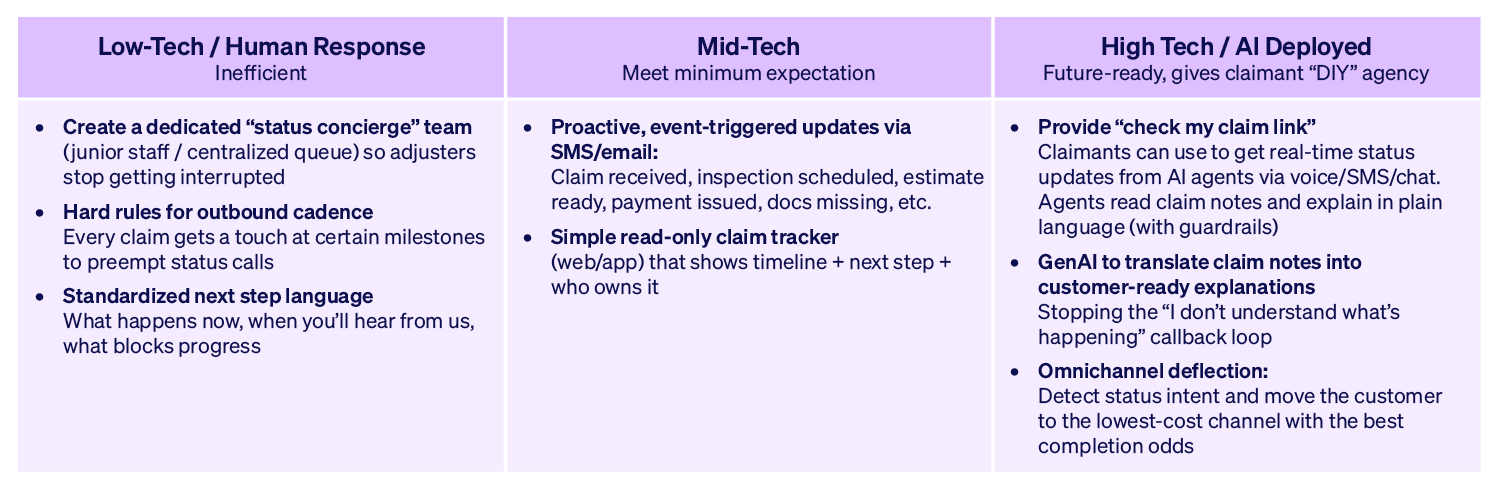
AI provides the smartest solution. When insurers deploy AI to manage claims status updates, they can meet two-way communication expectations and boost claimant satisfaction without burdening human team members. They also significantly reduce claim call volume and free adjusters to focus on resolving claims. Reducing inbound claim status calls by as little as 20-30% can materially improve adjuster productivity and service costs.
Liberate: Built for the Insurance Industry
When the Liberate AI platform is integrated with your claim system, you can provide 24/7 claim status reports instantly and effortlessly. Here’s how it works:
- After receiving the claimant’s FNOL, you can send a text and/or email with an embedded link they can use to check the status of their claim anytime in the future. Interacting via chat or email, they can interact with the AI agent to ask follow-up questions or provide additional information about their claim.
- Alternatively, they can call in to inquire about their claim, in which case, the Voice AI agent, Nicole, retrieves the claim and provides timely, real-time information.
- In all scenarios, claimants receive immediate information without burdening the claims team.
Transparent, real-time claim updates can reduce policyholder churn and lower inbound call volume, strengthening both retention and operational efficiency.
Ready to find out what Liberate can do for your company? Request a demo.