
Key Takeaways
- Independent agencies have repeatedly emerged stronger from industry disruption, and AI presents another opportunity to gain market share.
- Revenue per employee is becoming one of the clearest indicators of agency performance and long-term value.
- AI automates routine servicing work, allowing licensed professionals to spend more time selling, retaining and growing accounts.
- Higher operational efficiency can drive meaningful improvements in EBITDA and significantly increase enterprise value.
- Agencies that embed AI into their operating model today will be better positioned for profitable growth and premium valuations tomorrow.
I entered the insurance business in 1989. Since then, I have heard the eulogy for the independent agency more times than I can count. I did not have a computer on my desk when I started in the insurance business. I started when fax machines were cutting-edge, dot-matrix printers were amazing and then came email, browsers, paid search, social media and a plethora of new technology over the past 10 years.
When Gramm-Leach-Bliley passed in 1999 and banks were permitted to sell insurance, the industry braced for extinction. The banks would crush us. Then it was the captives.Their scale and direct distribution would render the independent agent irrelevant. Then came the internet, and the chorus grew louder still. Why would anyone need an agent when they could buy a policy online in minutes?
And yet here we are. The independent agency channel today writes 61.5% of all property and casualty insurance in the United States, including 87% of all commercial lines premium, according to the Big "I" 2025 Market Share Report. According to the 2024 Agency Universe Study, 75% of independent agencies reported revenue gains between 2022 and 2023, up significantly from the 62% that saw gains between 2020 and 2021. The Reagan Consulting and Big "I" 2025 Best Practices Study declared the industry has "never been healthier," with organic growth at 10.7% and top agencies already hitting $228,000 in revenue per employee.
The captives, meanwhile, have systematically slashed agent commission schedules, ceding the relationship, and ultimately the book, to the channel they were supposed to bury.
Every threat sharpened us. And now comes the next one: artificial intelligence.
This time is different. Not because AI is more dangerous than what came before, but because for the first time, the technology isn't a threat to the independent agency. It is the single greatest opportunity in the history of the independent agency channel.
The Number That Changes Everything
The metric that increasingly separates thriving agencies from stagnant ones is revenue per employee. It is the most honest measure of operational leverage in this business, and right now, most agencies are leaving an extraordinary amount of value on the table.
The industry average sits around $175,000 in revenue per employee. The Reagan/Big "I" Best Practices class of agencies, the top performers in the country, already average $228,000. The question AI raises is simple: what happens when the average agency catches the best, and the best go further still?
The math is astounding.
The $25 Million Agency
Consider a $25 million revenue agency with 143 employees. At $175,000 per employee, it generates $25 million in revenue, roughly $6.75 million in EBITDA, and carries a valuation of approximately $67.5 million at a 10x multiple, a fair market rate for a well-run independent today.
Now hold headcount constant and apply AI. Liberate's agentic voice and email platform handles 20-40% of certificate of insurance requests autonomously, manages endorsement intake and assists on another 10-15% of endorsement workflows, and resolves 30-40% of inbound service inquiries without human intervention. That is approximately 13–15% of total daily agency workload absorbed by AI, roughly 1.1 hours returned to every employee, every day. At 143 people, that is the equivalent of 19 full-time employees worth of capacity unlocked, redirected from transactional service work to revenue-generating activity.
The result: the same 143-person team, now operating at $200,000 in revenue per employee, generates $28.6 million in revenue and $7.72 million in EBITDA. Valuation moves to $77.2 million. Liberate's initial phase impact alone creates nearly $10 million in enterprise value, before a single dollar of organic growth is layered on top.
As that freed capacity compounds, and producers spend more time selling and account managers retain and round accounts rather than processing paperwork, revenue per employee climbs toward $250,000 and beyond. At $250,000 per employee, revenue reaches $35.75 million, EBITDA hits $9.65 million, and valuation climbs to $96.5 million. That is $29 million in value created from the same team.
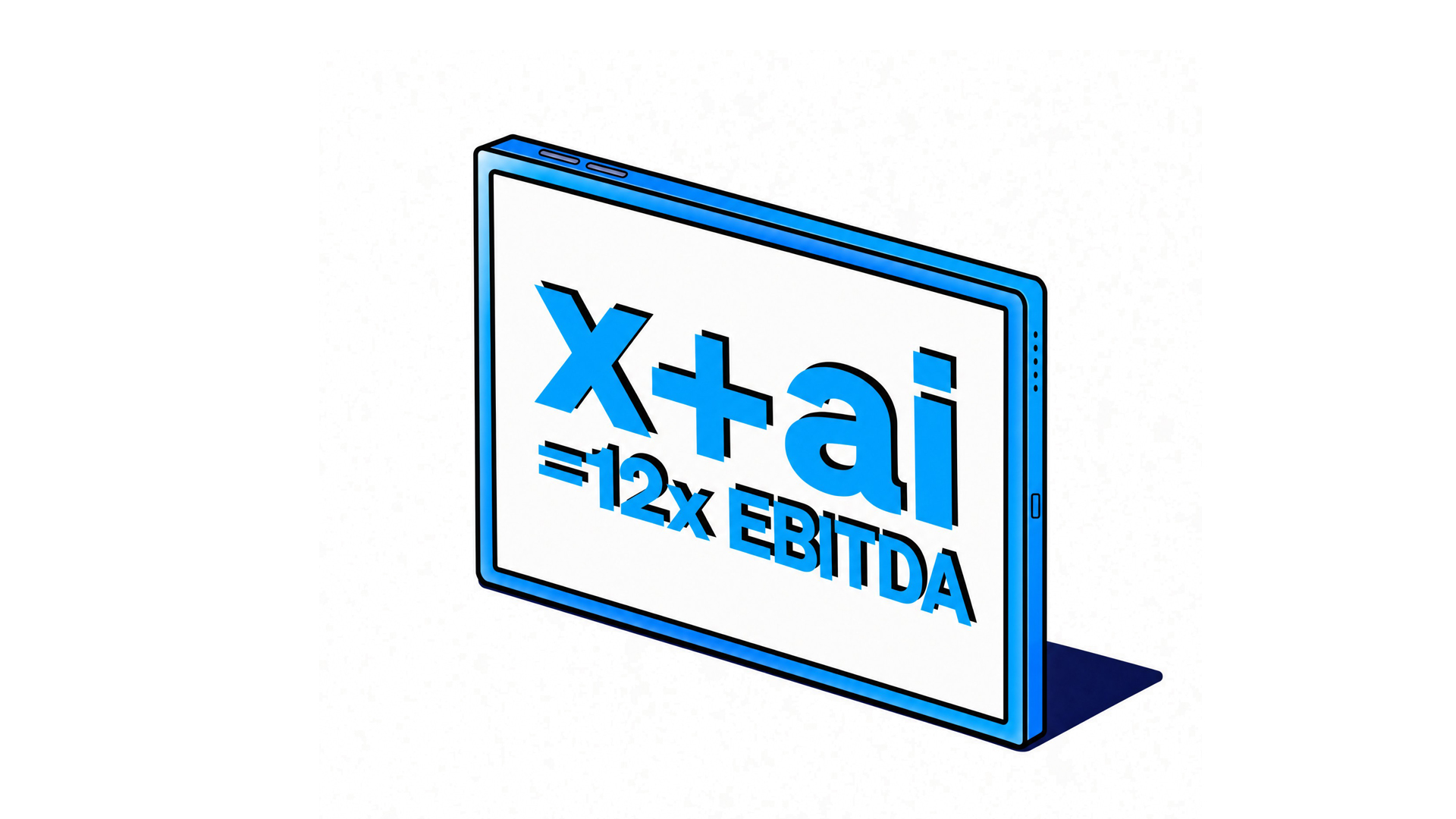
The aggressive scenario, $300,000 per employee, produces $42.9 million in revenue, $11.58 million in EBITDA, and a $115.8 million valuation. From a $67.5 million starting point, that is $48 million in enterprise value added. Same people. No new hires. Would an agency this efficient fetch 12-15x EBITDA?
The $100 Million Agency
Scale it up. A $100 million revenue agency with 571 employees at $175,000 per employee carries an estimated valuation of $270 million. Apply Liberate's platform across the same workflows, COI issuance, endorsement intake, inbound service inquiries, and the capacity equivalent of 75 full-time employees is unlocked annually. Revenue per employee moves to $200,000. Revenue reaches $114.2 million. EBITDA grows to $30.8 million. Valuation: $308 million. That is $38 million in enterprise value from the initial phase.
Push to $250,000 per employee through sustained growth on that recovered capacity and valuation reaches $386 million, $116 million above where the agency started. At $300,000 per employee, valuation hits $463 million. That is $193 million in value created. No new headcount. No acquisition. Just the same team, freed to do what they were hired to do as licensed professionals.
What AI Actually Does in a Day
It is worth being precise about what is driving this. Liberate is not replacing account managers or eliminating producers. It is absorbing the work that has always stolen time from both. It is also worth being precise by giving this simple truth. This isn’t easy. It isn’t an overnight success. It’s change management that will require time and monetary investment, but in the end, your agency will become, bigger. faster, stronger and more efficient than ever. The time is now.
Agentic AI handles tasks via voice and email: receiving the request, processing it against the policy data, responding to the client or certificate holder, and closing the loop, without a human in the workflow. For the 30-40% of COIs and 30%-40% of inbound inquiries that fit this profile, the transactions are completed 24/7/365.
The hours that come back go where they should have always gone: coverage reviews, account rounding, retention conversations, new business support and investing human efforts into your largest, most profitable accounts. The work that grows a book.
The Window Is Open — But Not Forever
The agencies being acquired at premium multiples right now, 10x, 11x, 12x EBITDA and above, are the ones with improving efficiency metrics, strong organic growth, and a credible technology story. Buyers are not just purchasing a book of business. They are purchasing a platform. An agency that can demonstrate $228,000 or $250,000 in revenue per employee, trending upward, with AI infrastructure already embedded, commands a fundamentally different conversation than one still running on manual workflows and legacy technology.
Every previous threat to the independent agency forced an evolution. Banks entered the market and we held our ground. Captives cut commissions and we grew our share. The internet arrived and clients discovered they still wanted an advisor, not an algorithm.
AI is not the end of the independent agent. It is the beginning of a version of this business that the founders of these firms could never have imagined: leaner, faster, more valuable, and more indispensable than ever.
The math is there. The tools are here. The question is whether your agency moves first, or watches the valuation gap widen while someone else does.